
The Iron Absorption Guide Your Doctor Didn't Give You
The difference between iron-rich eating and iron-smart eating

You got back the results of your last blood tests: your ferritin is at 22 ng/mL. So your doctor says, “You’re a bit low on iron, try eating more spinach.”
So you dutifully add spinach to your smoothies, toss it in your salads, and wonder why, three months later, you still feel exhausted. Your hair is still falling out. Your brain fog hasn’t lifted. What gives? (If you haven’t read my last article about why iron could be the reason why you always feel tired, start there!)
Here’s what most people don’t understand about iron: not all iron is created equal, and eating iron-rich foods isn’t enough if you’re not absorbing them properly.
After years of working with women struggling with iron deficiency, I’ve learned that the difference between someone who successfully raises their iron levels through diet and someone who doesn’t comes down to strategy, not just effort.
Let me show you exactly how to do this.
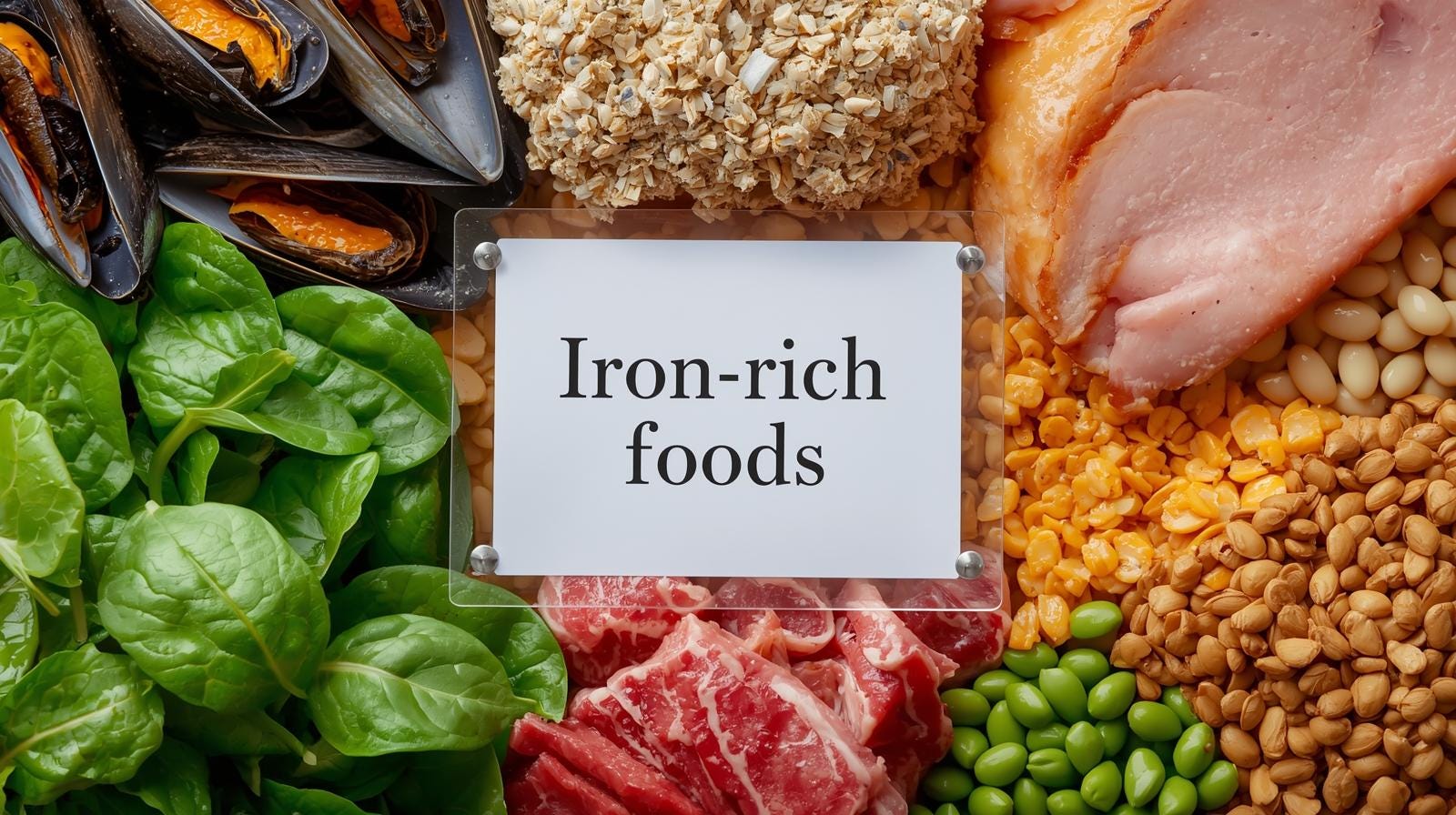
Understanding the Two Types of Iron (And Why It Matters)
Before we dive into what to eat, you need to understand something fundamental: there are two types of dietary iron, and they behave completely differently in your body.
Heme Iron: The Efficient One
Heme iron comes from hemoglobin and myoglobin in animal products. It’s absorbed at a rate of 15-35%, making it the most bioavailable form of dietary iron. Here’s what makes it special: your body absorbs heme iron regardless of what else you eat with it. Coffee with your steak? Your body will still absorb that iron. No vitamin C on your plate? Doesn’t matter as much with heme iron.
Top heme iron sources:
Organ meats:
Chicken liver: 11 mg per 3.5 oz (100 g)
Beef liver: 6.5 mg per 3.5 oz
Duck liver: 5.5 mg per 3.5 oz
Shellfish:
Mussels: 5.7 mg per 3 oz (85 g)
Oysters: 5 mg per 3 oz
Clams: 2.1 mg per 3 oz
Fish:
Sardines (canned): 2.9 mg per 3.75 oz (106 g) can
Salmon: 1.6 mg per 3 oz
Meat:
Beef (chuck roast): 2.7 mg per 3.5 oz
Lamb (shoulder): 2.2 mg per 3.5 oz
Turkey (dark meat): 2.3 mg per 3.5 oz
Chicken (dark meat): 1.3 mg per 3.5 oz
Practical tips:
Organ meats are iron powerhouses, but limit them to once per week due to high vitamin A content
Fresh shellfish can be expensive—canned oysters and sardines are budget-friendly alternatives that work just as well
Dark meat poultry has significantly more iron than white meat
Grass-fed beef typically contains more iron than grain-fed beef.
Non-Heme Iron: The Strategic One
Non-heme iron comes from plant foods and is absorbed at a much lower rate of 2-20%, depending on what else you consume with it. This is crucial to understand: if you’re vegetarian, vegan, or simply prefer plant-based foods, you need to be strategic about how you eat iron-rich foods, not just which ones you choose.
Top non-heme iron sources:
Legumes:
White beans (cooked): 6.6 mg per cup
Lentils (cooked): 6.6 mg per cup
Kidney beans (cooked): 5.2 mg per cup
Chickpeas (cooked): 4.7 mg per cup
Black beans (cooked): 3.6 mg per cup
Leafy greens (cooked):
Spinach: 6.4 mg per cup
Swiss chard: 4 mg per cup
Collard greens: 2.5 mg per cup
Seeds and nuts:
Pumpkin seeds: 4.2 mg per oz (28 g)
Hemp seeds: 2.4 mg per oz
Cashews: 1.9 mg per oz
Other plant sources:
Blackstrap molasses: 3.5 mg per tablespoon
Edamame (cooked): 3.5 mg per cup
Quinoa (cooked): 2.8 mg per cup
Dark chocolate (70-85% cacao): 3.4 mg per oz
Want printable food lists you can stick on your fridge and keep as a quick reference?
My High Iron Foods Lists include iron-rich foods organized by type, serving sizes, and iron content—making meal planning simple and stress-free.
To put absorption rates in perspective:
If you eat 3.5 oz of beef containing 2.7mg of iron, you’ll absorb approximately 0.5-0.9mg.
If you eat 1 cup of lentils containing 6.6mg of iron, you’ll absorb approximately 0.1-1.3mg, depending on what else you eat with it.
This doesn’t mean plant-based sources are inadequate; it means you need to eat more of them and be strategic about enhancing absorption. Which brings us to...
How To Maximize Iron Absorption
Getting iron into your body is only half the battle. The real magic happens when you optimize absorption. This is where most people go wrong, and it’s the difference between success and frustration.
Your Secret Weapon: Vitamin C
Vitamin C (ascorbic acid) is the most powerful absorption enhancer you have access to. It can increase non-heme iron absorption by up to 300%. Let me repeat that: three hundred percent.
The rule is simple: include a vitamin C-rich food with every iron-containing meal, especially if you’re relying on plant-based iron sources.
Best vitamin C sources to pair with iron:
Fruits:
Citrus fruits (oranges, grapefruit, lemons, limes)
Strawberries
Kiwi
Papaya
Pineapple
Vegetables:
Bell peppers (especially red peppers—they have more vitamin C than oranges)
Broccoli
Brussels sprouts
Tomatoes and tomato juice
Cauliflower
Potatoes with skin
Practical applications:
Squeeze lemon juice over your spinach salad
Add strawberries to your iron-fortified oatmeal
Include bell peppers in your bean dishes
Have a kiwi, an orange, or a mandarin for dessert after an iron-rich meal
Make a smoothie with spinach and citrus
Add tomatoes to your lentil soup
Other Absorption Enhancers
Meat, fish, and poultry: These contain a “meat factor” (MFP factor) that enhances absorption of non-heme iron from plant foods eaten at the same meal. This is why a small amount of meat in a bean dish significantly improves iron absorption.
Fermented foods: Sauerkraut, kimchi, and other fermented vegetables may improve iron absorption through their organic acids and by promoting gut health.
Onions and garlic: The sulfur compounds in these foods may enhance iron absorption. Plus, they make everything taste better.
Beta-carotene: Found in orange and red vegetables like carrots, sweet potatoes, and red bell peppers, beta-carotene can improve iron absorption.
What’s Sabotaging Your Iron Absorption
This is crucial. The following compounds can significantly reduce iron absorption when consumed with iron-rich foods. Timing is everything.
1. Tannins (in coffee, tea, wine):
Tannins are polyphenols that bind to iron and can reduce absorption by up to 90%. This applies to both heme and non-heme iron. Coffee, tea (both black and green), most wines and beers, and even chocolate contain tannins.
What to do: Consume tannin-rich beverages at least 1-2 hours before or after your iron-rich meals. I know this is hard for coffee lovers, but it makes a real difference. Have your coffee between meals, not with them.
2. Calcium:
High-dose calcium supplements (300 mg or more) can inhibit iron absorption when taken at the same meal. Interestingly, calcium from dairy products as part of a regular diet doesn’t appear to significantly impair iron status over time, though it may have a modest effect in individual meals.
What to do: Don’t take calcium supplements with iron-rich meals. If you take both calcium and iron supplements, space them several hours apart.
3. Phytates (phytic acid):
Present in whole grains, legumes, nuts, and seeds. Here’s the irony: these foods contain iron, but the phytates in them can inhibit absorption.
What to do:
Soak beans, lentils, nuts, and seeds for 8-12 hours before cooking or consuming
Choose sprouted grain products when possible
Pair these foods with vitamin C sources to counteract the phytate effect
Choose sourdough bread (the fermentation process reduces phytate content)
4. Oxalates:
Present in spinach, chard, beet greens, rhubarb, and chocolate. These bind to iron and reduce absorption.
What to do:
Cooking reduces oxalate content significantly
Combine these foods with vitamin C sources
Don’t rely solely on high-oxalate greens like spinach for iron; diversify with lower-oxalate options like kale, collards, and chard
5. Other absorption inhibitors:
Antacids and medications that reduce stomach acid (PPIs like omeprazole)
Zinc supplements, when taken at the same time as iron
Egg proteins (if you’re eating eggs with your iron-rich meal, the effect is minimal, but don’t rely on eggs as your primary iron source)
The Cast Iron Cooking Hack
Here’s a simple trick that can significantly increase the iron content of your food: cook in cast-iron cookware, especially acidic foods.
A study found that cooking tomato sauce in cast iron for 25 minutes increased iron content from 0.6mg to 5.7mg per 100g. That’s nearly a 10-fold increase.
Best practices:
Use well-seasoned cast iron (not enamel-coated)
Cook acidic foods like tomato sauce, chili, or stews
Cook for longer periods for maximum iron transfer
Liquid dishes benefit more than dry cooking methods
Real Results: Laura’s Story
Let me tell you about Laura, a 44-year-old client who came to me exhausted and frustrated. Her ferritin was 18 ng/mL - technically “in range” according to her doctor, but she felt terrible. Brain fog, crushing fatigue, hair falling out in clumps. Sound familiar?
Laura was vegetarian and had been for 15 years. She ate plenty of spinach salads and bean dishes, but she was making critical mistakes that were sabotaging her iron absorption.
What Laura was doing wrong:
Drinking coffee with/after every meal (including her iron-rich breakfast)
Eating raw spinach salads without any vitamin C
Not soaking her beans or lentils before cooking
Taking her calcium supplement with breakfast
Relying heavily on whole-grain bread and cereal (high in phytates)
The simple changes we made:
Coffee timing: We moved her coffee to mid-morning, at least 2 hours after breakfast. She could still have her beloved coffee, just not with her iron-rich meals.
Breakfast overhaul: Instead of whole-grain bread, she started having:
• 1/4 cup oatmeal with 1 tablespoon blackstrap molasses (5.6mg iron)
• 1 cup strawberries on top (vitamin C)
• including all the protein-rich ingredients like yogurt, kefir, and protein powder
• A small glass of orange juice alongside
Lentil prep: She started soaking lentils overnight before cooking. This simple step reduces phytates significantly.
Vitamin C at every meal: We made sure every iron-containing meal had a vitamin C source:
Lemon juice squeezed over her lunch salads
Bell peppers added to her bean dishes
Tomatoes in her lentil soups
Broccoli or Brussels sprouts as dinner sides
Cast iron cooking: She bought a cast-iron pot and started making her weekly batch of lentil-tomato soup in it. This alone added several milligrams of iron to each serving.
Strategic snacking: Instead of crackers or chips, she kept:
Pumpkin seeds (4.2mg iron per oz)
Hummus with red bell peppers
A square of dark chocolate (70%+ cacao)
Calcium supplement timing: She moved her calcium supplement to bedtime, away from her iron-rich meals.
The results:
After 3 months of these changes, Laura’s ferritin jumped from 18 to 52 ng/mL. Her energy started improving around week 6. By month 3, she reported:
No more 3 PM energy crashes
Clearer thinking and better focus at work
Her hair stopped falling out
She could work out again without feeling completely wiped
Better mood and less irritability
The key insight? Laura didn’t need to eat more iron - she was already eating plenty. She needed to absorb the iron she was eating. Small strategic changes made all the difference.
Need a comprehensive guide to help you implement these strategies?
My Iron in Perimenopause: Boost Your Energy Naturally guide includes detailed meal plans, shopping lists, and a complete iron optimization system designed specifically for women in perimenopause.
Meal Prep Strategies for Busy Women
The biggest obstacle to eating well when you’re exhausted? Time and energy. Here’s how to make iron-rich eating sustainable:
Weekend Prep (2-3 hours total)
Cook a large pot of lentil or bean soup in your cast-iron pot. Make enough for 5-6 servings. Portion into containers and freeze half for later weeks.
Roast a whole chicken. Use dark meat portions for higher iron content. Shred the meat and store it in portions for quick salads and stir-fries.
Cook a big batch of quinoa or brown rice in your cast-iron pot. This becomes the base for multiple meals.
Hard-boil a dozen eggs. These are grab-and-go protein and iron sources.
Prepare a large spinach and white bean salad. Dress individual portions just before eating to keep them fresh.
Make energy balls with oats, blackstrap molasses, pumpkin seeds, and a touch of dark chocolate. These are perfect iron-rich snacks.
Time-Saving Hacks
Slow cooker: Set up bean soups or beef stews in the morning. Come home to a ready meal.
Instant Pot: Cook lentils and beans in 20-30 minutes.
Pre-cut frozen vegetables: Save time and retain nutrients. Keep frozen spinach, broccoli, and bell peppers on hand.
Canned fish: Sardines, salmon, and tuna provide instant protein and iron. No cooking required.
Rotisserie chicken: Buy pre-cooked and choose dark meat portions for higher iron content.
Pre-cooked lentils or beans: Available in jars or BPA-free cans. Rinse and use immediately.
When to Consider Supplementation
Sometimes, despite your best dietary efforts, food alone isn’t enough. This is particularly true if:
Your ferritin is below 30 ng/mL, and you have symptoms
You’re experiencing very heavy menstrual bleeding
You’re strictly vegetarian or vegan
You have a digestive disorder affecting absorption (celiac, Crohn’s, etc.)
You’ve made dietary changes for 3 months, and your levels haven’t improved
Work with your doctor on supplementation. They can recommend the appropriate dose and form based on your specific situation. Typically, rebuilding iron stores requires 150-200mg of elemental iron daily, taken on an empty stomach with vitamin C for optimal absorption.
Important considerations:
Start with a lower dose and increase gradually to minimize side effects
Take iron supplements with vitamin C (orange juice or a vitamin C supplement)
Avoid taking iron with calcium, coffee, tea, or antacids
Retest your levels after 3 months to ensure the supplementation is working
Once your levels are optimal, you may be able to reduce or stop supplementation and maintain with diet alone
A note on iron supplements:
While iron supplementation can be incredibly effective for rebuilding depleted stores, many women struggle with one uncomfortable side effect: constipation.
If you’ve ever taken iron supplements and ended up more miserable than before, you’re not alone, but there are solutions.
In a couple of weeks, I’ll be sharing an article on constipation in perimenopause with recommendations that can be applied also when taking iron supplements.
Stay tuned ;)
In Conclusion
Increasing your iron levels through food isn’t just about eating more spinach. It’s about understanding the difference between heme and non-heme iron, strategically pairing foods to maximize absorption, avoiding absorption blockers, and being consistent.
Your action steps:
Get tested to know your baseline ferritin level
Include iron-rich foods daily. Aim for heme sources if you eat animal products, or strategic plant-based combinations if you don’t
Pair every iron-rich meal with vitamin C to boost absorption
Time your coffee and tea at least 1-2 hours away from iron-rich meals
Cook in cast iron when making acidic dishes like tomato sauce or chili
Meal prep on weekends to make iron-rich eating sustainable
Retest in 3 months to track your progress
Small, strategic changes can yield significant results. You don’t need perfection. You need consistency and a smart strategy.
Your body wants to heal. Your cells want energy. Give them the iron they need, in a form they can actually use, and watch your energy return.
This is such a helpful article. Thank you. I started an iron recovery plan last week, the tips you have shared here will really help.
Thank you for the comprehensive information! I can't get anywhere with keeping my ferritin up with diet alone, and I feel so much better after getting my ferritin up from 8 to over 100 with supplements.
I shared my story with iron deficiency here:
https://whitneyaguirre.substack.com/p/starting-from-scratch