
The Perimenopause Snack Fix
13 high-protein snacks that help reduce cravings, stabilize energy, and actually keep you full

One of the most frustrating things about perimenopause is how suddenly your appetite can start feeling… different.
The foods that used to keep you full no longer work.
You eat breakfast and feel hungry again an hour later.
You crave sugar in the afternoon even when you’re trying to “eat healthy.”
You start snacking more, thinking you just need more discipline, while secretly wondering why food suddenly takes up so much mental space.
And for many women, this happens at the exact same time they notice other changes too:
Poorer sleep.
More fatigue.
More belly fat.
More cravings.
More irritability.
Less energy to “stay on track.”
This is not random.
During perimenopause, hormonal fluctuations can affect blood sugar regulation, stress response, sleep quality, muscle mass, and appetite hormones, all of which influence how hungry and satisfied you feel throughout the day.
This is why many women suddenly find themselves stuck in the cycle of:
Eat something quick → feel better briefly → crash → crave more food → snack again → repeat.
And unfortunately, many of the snacks marketed as “healthy” are making this worse.
Because most snacks are built around convenience, not satiety.
They are too low in protein, too low in fiber, and too easy to digest quickly.
Which means they fill your mouth for a few minutes… but do very little to actually satisfy your body.
The good news is that this can change surprisingly quickly once you understand one thing:
Your snacks need to support your hormones, not fight them.
That means building snacks around protein, fiber, healthy fats, and blood sugar stability, especially in perimenopause, when your body becomes less forgiving of the “grab whatever” approach.
The goal is not to snack perfectly.
The goal is to stop feeling constantly hungry, constantly craving, and constantly like you need more willpower.
Because this is not just about food.
It’s about helping your body feel safe, stable, nourished, and supported during a phase of life where things can suddenly feel unpredictable.
And that’s exactly what these snacks are designed to do.
But before we get to the actual options, let’s look at the snack mistakes many women in perimenopause tend to make.
The Snacks That Feel Healthy… but Keep You Stuck
One of the most confusing parts of perimenopause is that many women start eating healthier than ever… and still feel constantly hungry.
You swap biscuits for rice cakes.
You buy the low-fat yogurt.
You snack on fruit instead of chocolate.
You choose granola because it sounds wholesome.
And yet somehow, by late afternoon, you’re exhausted, craving sugar, thinking about food nonstop, and wondering what you’re doing wrong.
This is where many women start blaming themselves.
But often, the issue is not a lack of discipline.
It’s that the snacks themselves are not built for the hormonal and metabolic shifts happening during perimenopause.
Because during this phase, blood sugar swings tend to feel stronger, muscle mass naturally declines more easily, sleep disruption increases appetite signals, and stress hormones can make cravings feel louder and more urgent.
Which means snacks that once “worked fine” may suddenly stop working altogether.
Here are some of the biggest offenders.
Fruit on Its Own
Fruit is nutritious.
But as a standalone snack, it often does not provide enough staying power for women in perimenopause.
An apple or banana by itself digests quickly, especially if there is no protein or fat slowing things down. This can lead to a quick rise in blood sugar followed by an energy dip and renewed hunger shortly after.
And during perimenopause, this can become even more noticeable because many women develop some degree of insulin resistance as estrogen levels fluctuate. This means the body may become less efficient at managing blood sugar, leading to bigger energy swings, stronger cravings, and feeling hungry again sooner after eating carbohydrate-heavy foods on their own.
That does not mean fruit is bad.
It means fruit works better when paired with something that helps stabilize energy.
Think:
apple + peanut butter
berries + Greek yogurt
banana + protein smoothie
The goal is not to fear carbohydrates.
The goal is to make them more satisfying and supportive.
“Low-Fat” Snack Foods
Many women grew up hearing that low-fat foods were the healthier choice.
But in reality, removing fat often removes satiety too.
And when companies reduce fat, they frequently add sugar, starches, or extra flavoring to compensate.
This is why many low-fat yogurts, cereal bars, or snack packs leave you hungry again very quickly.
Healthy fats are not the enemy.
In fact, they can help support:
fullness
blood sugar stability
hormone production
absorption of fat-soluble vitamins
Adding some fat to a snack often makes it more satisfying, not less supportive of your goals.
Tiny “Diet” Snacks
The 90-calorie snack pack.
The dry rice cakes.
The handful of pretzels.
The mini granola bar that barely feels like food.
These snacks are often designed around calorie reduction rather than satisfaction.
The problem is that your body still expects nourishment.
If a snack contains very little protein, fiber, or fat, it may not meaningfully reduce hunger, which can leave you grazing all afternoon or overeating later because your body is still trying to meet its needs.
This is one reason many women feel trapped in the cycle of:
“trying to be good” → getting hungrier → overeating later → feeling guilty.
Sometimes a slightly more substantial snack is actually the more supportive option.
Protein Bars That Are Basically Candy Bars
Some protein bars can absolutely be useful.
Others are little more than ultra-processed sweets with a “wellness” label.
A bar with 20+ grams of protein and decent fiber can genuinely help with satiety.
But many contain:
very little actual protein
large amounts of added sugars or syrups
ingredients that leave you hungry again quickly
Convenience matters, especially in busy midlife years, but not all convenience foods support energy and appetite equally.
Crunchy Snacks That Fill Your Mouth but Not Your Body
Popcorn.
Crackers.
Pretzels.
Puffed snacks.
Dry cereal.
These foods can feel satisfying while you’re eating them because they provide crunch and volume.
But many are low in protein and disappear quickly from the stomach, meaning fullness often does not last very long.
If you love crunchy snacks, the solution is not necessarily to avoid them.
It is to anchor them with protein or fat.
For example:
crackers + cottage cheese
popcorn + edamame
seeded crackers + tuna
roasted chickpeas + feta
A Different Way to Think About Snacks
Instead of asking:
“Is this low-calorie?”
Try asking:
“Will this actually keep me full and energized?”
A snack that satisfies you for three hours is often far more supportive than a tiny snack that leaves you hunting for more food 40 minutes later.
Especially in perimenopause, satiety matters.
Blood sugar stability matters.
Protein matters.
Muscle maintenance matters.
And feeling mentally calm around food matters too.
Sometimes, the more nourishing snack is the one that ultimately helps you eat less overall because you are no longer stuck in the cycle of constant cravings and rebound hunger.
So let’s have a look at some yummy options.
13 Perimenopause Snacks That Actually Keep You Full
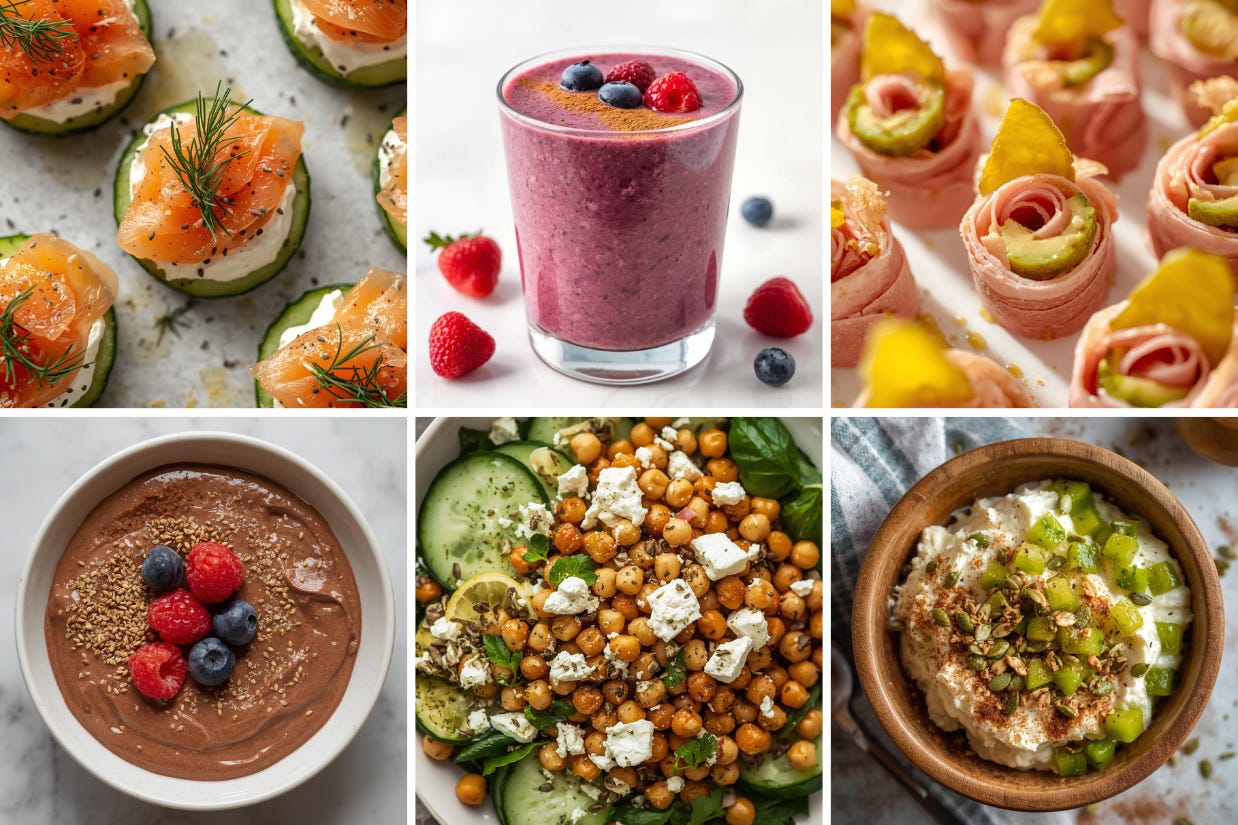
1. Chocolate Greek Yogurt Mousse
What it does
Satisfies sweet cravings while giving you protein, fiber, and gut-supportive ingredients.
Why it works
Greek yogurt provides protein to support muscle maintenance, which becomes increasingly important in perimenopause. Cocoa adds a rich dessert-like flavor, while chia or ground flax adds fiber to slow digestion and support gut health.
Ingredients
170 g Greek yogurt or skyr
1 tsp unsweetened cocoa powder
1 Tbsp chia seeds or ground flaxseed
½ scoop chocolate protein powder
Cinnamon or vanilla extract
A few berries on top
Approximate nutrition
Protein: ~20 g
Fiber: ~4–6 g
Calories: ~200–240 kcal
Best for
Afternoon sweet cravings, post-workout, or an evening snack that feels like dessert.
2. Cottage Cheese with Kiwi, Pumpkin Seeds & Cinnamon
What it does
Supports fullness, digestion, and mineral intake.
Why it works
Cottage cheese is rich in slow-digesting protein, which helps keep you satisfied for longer. Kiwi adds vitamin C and fiber, while pumpkin seeds provide magnesium and zinc — two minerals that many women do not get enough of.
Ingredients
150–200 g cottage cheese
1 kiwi, chopped
1 Tbsp pumpkin seeds
Cinnamon
Approximate nutrition
Protein: ~22–28 g
Fiber: ~3–4 g
Calories: ~230–280 kcal
Best for
Late afternoon hunger or a light evening snack.
3. Boiled Eggs with Hummus & Crunchy Vegetables
What it does
Gives you protein, healthy fats, fiber, and crunch.
Why it works
Eggs provide high-quality protein and choline, while hummus adds fiber and plant-based fats. The vegetables add volume and texture without a blood sugar spike.
Ingredients
2 boiled eggs
3 Tbsp hummus
Carrot sticks, cucumber, bell pepper, or celery
Paprika or everything bagel seasoning
Approximate nutrition
Protein: ~15–17 g
Fiber: ~5–7 g
Calories: ~260–320 kcal
Best for
When you want something savory and filling.
4. Smoked Salmon Cucumber Bites
What it does
Feels elegant, light, and satisfying while supporting protein and omega-3 intake.
Why it works
Smoked salmon provides protein and omega-3 fats, which are important for heart and brain health. Cucumber adds crunch, while cream cheese or Greek yogurt gives creaminess and staying power.
Ingredients
80–100 g smoked salmon
Thick cucumber slices
2 Tbsp cream cheese or thick Greek yogurt
1 Tbsp of chia seeds added to the cream cheese
Dill, lemon juice, black pepper
Approximate nutrition
Protein: ~20–22 g
Fiber: ~5–6 g
Calories: ~240–300 kcal
Best for
A light lunch-style snack, or when you want something fresh and savory.
5. Apple Slices with Peanut Butter & Hemp Seeds
What it does
Turns fruit into a more balanced snack.
Why it works
Fruit alone may not keep you full for long. Pairing apple with peanut butter and hemp seeds adds fat, protein, and minerals, helping slow digestion and reduce the blood sugar roller coaster.
Ingredients
1 apple, sliced
1½ Tbsp peanut butter
1 Tbsp hemp seeds
Cinnamon
Approximate nutrition
Protein: ~9–11 g
Fiber: ~6–8 g
Calories: ~250–300 kcal
Best for
When you want fruit but need it to actually last.
6. Tuna Avocado Lettuce Cups
What it does
Works almost like a mini meal.
Why it works
Tuna provides lean protein, while avocado adds monounsaturated fats and fiber. Lettuce gives freshness and makes it feel like a proper snack rather than something random eaten standing up.
Ingredients
1 small can tuna, drained
¼–½ avocado
Romaine or gem lettuce leaves
Lemon juice
Black pepper
Optional: chopped pickles or capers
Approximate nutrition
Protein: ~22–28 g
Fiber: ~4–7 g
Calories: ~250–330 kcal
Best for
When you are truly hungry, not just snacky.
7. Edamame with Sea Salt & Sesame
What it does
Provides plant-based protein, fiber, and a satisfying salty snack.
Why it works
Edamame is one of the best plant-based snack options because it contains both protein and fiber. It is also rich in magnesium and phytoestrogens, which may be supportive for some women during perimenopause.
Ingredients
1 cup cooked edamame
Sea salt
1 tsp sesame seeds
Chili flakes or lemon zest
Approximate nutrition
Protein: ~17 g
Fiber: ~8 g
Calories: ~200–230 kcal
Best for
A salty snack, work snack, or evening alternative to crisps.
8. Turkey, Avocado & Pickle Roll-Ups
What it does
Satisfies salty cravings without the blood sugar crash.
Why it works
Turkey provides protein, avocado adds fat and fiber, and pickles bring crunch and acidity. This is especially useful when you want something snacky but do not actually need carbs.
Ingredients
4–6 slices turkey breast
¼ avocado, sliced or mashed
Pickle spears
Mustard
Approximate nutrition
Protein: ~18–24 g
Fiber: ~3–5 g
Calories: ~220–280 kcal
Best for
When you want something quick, savory, and low-effort.
9. Kefir Berry Smoothie with Flaxseed
What it does
Supports gut health, protein intake, and hydration.
Why it works
Kefir contains live cultures, berries add antioxidants and fiber, and flaxseed supports digestion and provides plant-based omega-3 fats. Add protein powder if you need it to keep you full longer.
Ingredients
250 ml plain kefir
½ cup frozen berries
1 Tbsp ground flaxseed
½ scoop protein powder
Cinnamon
Approximate nutrition
Protein: ~18–25 g
Fiber: ~5–7 g
Calories: ~220–300 kcal
Best for
A light breakfast, post-workout snack, or gut-supportive afternoon option.
10. Roasted Chickpeas with Feta & Cucumber
What it does
Gives you crunch, fiber, and Mediterranean-style satisfaction.
Why it works
Chickpeas provide fiber and plant protein, while feta adds saltiness, calcium, and extra protein. Cucumber keeps the snack fresh and hydrating.
Ingredients
½ cup roasted chickpeas
40 g feta
Cucumber slices
Oregano or za’atar
Optional: squeeze of lemon
Approximate nutrition
Protein: ~14–17 g
Fiber: ~6–8 g
Calories: ~250–320 kcal
Best for
When you want crunch but do not want crackers or crisps.
11. High-Protein Chia Pudding
What it does
Helps with sweet cravings, gut health, and longer-lasting fullness.
Why it works
Chia seeds absorb liquid and create volume, while protein powder or Greek yogurt helps the snack actually keep you full. This is especially helpful if constipation or slower digestion has become more noticeable in perimenopause.
Ingredients
2 Tbsp chia seeds
150 ml milk of your choice
½ scoop protein powder or 2 tbsp Greek yogurt
Vanilla extract
Berries on top
Approximate nutrition
Protein: ~15–22 g
Fiber: ~9–11 g
Calories: ~250–320 kcal
Best for
Make-ahead breakfasts, sweet snacks, or evenings.
12. Sardines on Seeded Crackers
What it does
Supports protein, omega-3s, calcium, and heart health.
Why it works
Sardines are nutrient-dense and provide protein, omega-3 fats, vitamin D, and calcium if eaten with bones. Pairing them with seeded crackers gives crunch and fiber.
Ingredients
1 small can of sardines
2–3 seeded crackers
Lemon juice
Black pepper
Optional: sliced tomato or cucumber
Approximate nutrition
Protein: ~20–25 g
Fiber: ~3–5 g
Calories: ~250–350 kcal
Best for
A nutrient-dense savory snack or quick lunch.
13. Warm Protein Oats with Ground Flax & Berries
What it does
Gives comfort-food energy without the usual oatmeal crash.
Why it works
Oats alone may not be enough for many women in perimenopause, especially if blood sugar feels more sensitive. Adding protein powder and flaxseed makes this more balanced and satisfying.
Ingredients
40 g oats
½ scoop protein powder
1 Tbsp ground flaxseed
½ cup berries
Cinnamon
Optional: 1 tsp almond butter
Approximate nutrition
Protein: ~18–25 g
Fiber: ~7–10 g
Calories: ~300–380 kcal
Best for
Cold mornings, pre-workout fuel, or when you want something warm and grounding.
What You Can Realistically Expect
These snacks are not magic.
But they can make a very noticeable difference.
Many women find that once they start prioritizing protein, fiber, and balanced snacks:
Afternoon crashes become less intense
Cravings feel quieter
Energy becomes more stable
Overeating at dinner decreases
Food takes up less mental space
You may still get hungry.
That is normal.
The goal is not to eliminate appetite.
The goal is to stop feeling controlled by it.
And it usually takes a little time.
For the first few days, you may simply be figuring out what combinations work best for your body.
Within a couple of weeks, many women notice that they can go longer between meals without constantly thinking about food.
The biggest shift is often not physical.
It is mental.
Food starts feeling less chaotic.
Less urgent.
Less emotionally exhausting.
And that matters more than most people realize.
A Gentle Reminder Before You Start
If your appetite has changed in perimenopause, you are not imagining it.
And you are not failing.
Your body is going through a phase of enormous hormonal and metabolic change.
Which means your nutrition needs may need to change, too.
So instead of trying to “eat less” or rely on willpower, try supporting your body differently.
Start simple.
Pick two or three snacks from this list that genuinely appeal to you.
Keep the ingredients visible and easy to reach.
Pay attention to how long you stay full.
Notice how your energy feels afterward.
And remember:
The best snack is not the one that looks the healthiest on Instagram.
It is the one that helps you feel nourished, steady, satisfied, and supported.
Which of these snacks sounds most realistic for your life right now?
Reply in the comments — I’d love to know whether you’re more of a sweet snack person, a savory snack person, or someone who simply needs ideas that take less than 5 minutes.
If this article helped, consider subscribing for more evidence-based, practical support for women navigating perimenopause.
And if you are looking for personalized help, book a free 15-minute discovery call with me to see whether 1:1 support could help you.
❤️ Loved this article and want to support my work without becoming a paid subscriber? → You can buy me a coffee instead ☕