
Round-up #4 - Fuel, Challenge, Celebrate
News on legumes, failed habits, interesting reads and a delicious recipe

Welcome back to our monthly round-up, where I share my favorites of the month: from science, podcasts, books, and songs to TV shows, recipes, habits, and more.
Previous round-ups are available in the Round-up Section
🤓 SCIENCE:
Good news for my beloved legumes, it seems like they provide fewer calories than previously thought.
This 2025 randomized controlled trial with 18 healthy adults looked at how many calories from chickpeas and lentils actually get absorbed versus pass out in stool.
Participants followed three 17‑day diets: one without legumes, one with 1 cup of chickpeas per day, and one with 1 cup of lentils per day, keeping overall calories similar.
Stool samples were collected over the last 7 days, with a blue dye helping identify which samples belonged to that period.
The study found that, on average, people absorbed about 89.6% of the calories in chickpeas and only about 84% of the calories in lentils, meaning roughly 10–16% of their calories were not absorbed and ended up in the feces.
This matches earlier research on nuts such as walnuts, cashews, and almonds, which also show incomplete calorie absorption because their fibrous cell walls trap some of their fat and carbs from digestive enzymes.
This structure makes it harder for the body to access all the calories, so whole, minimally processed versions of these foods usually deliver fewer usable calories than the label shows.
Processing them—like turning almonds into almond butter or lentils into a puree—breaks open the cell walls and increases the calories available, as more of the enclosed fat and carbs can be digested.
Because of this, food labels (which use the standard Atwater system) may slightly overestimate how many calories these fiber‑rich foods actually deliver.
This likely helps explain why high‑fiber diets with legumes and nuts tend to support weight loss, since a bit more energy is excreted.
However, the effect is modest, often just tens of calories per serving, so total calorie intake still matters far more than this small absorption difference.
If you add legumes or nuts but eat more calories overall, you can still gain weight despite the extra fecal losses.
🌱 HABITS:
This Month’s Habit Review: 10 triceps push-ups a day
The new habit I had set for May was to do 10 triceps push-ups a day, but… it didn’t happen.
I had a trip to Italy scheduled for 10 days and, even though I had the best intentions of doing home workouts while I was there, life always gets busier when I’m in Sardinia, and I was barely able to get any work done.
To be honest, I think things had already started slipping before the trip. I was working harder to get ahead of schedule, and in the process, I let a few habits fall through.
Before leaving, I had already stopped going to the gym for two weeks, which also affected my diet. And once things were rolling in that direction, there was no way I was going to get back on track while traveling.
This was a reminder that things don’t always go according to plan, and part of growing is learning to accept that without turning it into failure.
I’ve also realized that this was probably more of a challenge than a true habit. I don’t really see myself doing 10 triceps push-ups every single day for the rest of my life.
It feels more like a short-term goal to build strength and momentum rather than something meant to become part of my permanent routine.
So instead of forcing myself to complete it just for the sake of consistency, I’d rather focus on rebuilding a regular gym routine and making movement feel sustainable again.
On the bright side, I’m happy to report that the habit started in March of balancing on one foot while doing face yoga is still happening, even while traveling.
As for April’s habit of eating 1 Tbsp of daily sauerkraut, I’m going back to it now that I’m back home.
New Habit for June: Eat Slowly
After spending more time with my dad during this past trip to Sardinia, I started noticing more and more mannerisms, personality traits, and even physical characteristics that I’ve inherited from him.
One thing I definitely didn’t inherit, though, is his ability to stay naturally slim despite eating whatever he wants in the quantities he wants. Luckily, he still has a great appetite at 85.
What I also noticed is that he takes his time while eating. Growing up, this was considered a negative thing at home because my mom, my siblings, and I were always the ones to finish our meals quickly.
Then I started thinking about other people I know who also eat slowly. The ones that came to mind all happened to be naturally slim as well.
As a nutritionist, I already know the science behind mindful eating and slower eating speed. Eating slowly gives your body enough time to register fullness signals through hormones such as GLP-1, peptide YY, and leptin, while also allowing hunger hormones like ghrelin to decrease.
In other words, your brain has more time to realize that you’ve had enough food before you accidentally overeat.
I stopped to analyze my own eating patterns, and although I thought I was a mindful eater, I realized I actually eat much faster than I imagined.
So for this coming month, the habit I want to introduce is simple: eat more slowly. Chew for longer, put the fork down between bites, and make meals feel a little less rushed.
I’m curious to see whether this will naturally reduce my caloric intake without forcing restriction or counting calories.
Would you like to join me in creating this new habit? We could check in with each other and keep one another accountable.
Let me know if you’re interested by leaving a comment below.
🔥 HOT MERCH ON THE MENOPAUSE COACH SHOP
Get 25% off all products with code SUB25
Light it, breathe it in, and let everyone in the room get the hint — this candle sets the mood and the boundaries. Consider it aromatherapy with a warning label.
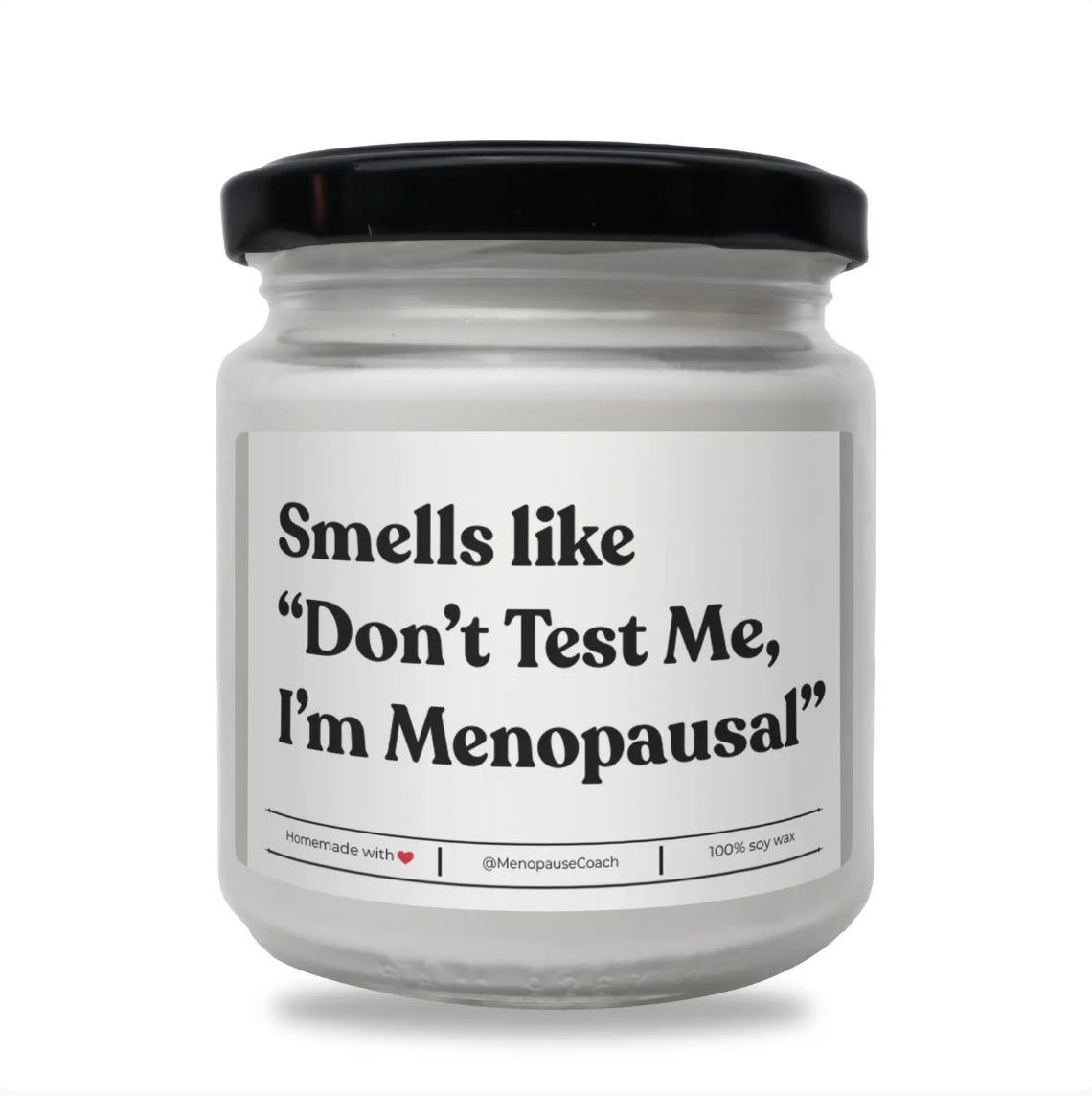
Because if menopause had a fairy tale, it’d be this one: seven uninvited houseguests named Itchy, Bitchy, Sweaty, Sleepy, Bloated, Forgetful & Psycho — and absolutely no Prince Charming coming to save you.

Because some days you’re a force of nature, and some days you’re running on fumes and forgotten what you walked into the room for — either way, you showed up, and that counts.

🩺 This goes for my fellow wellness pros: Stop reinventing the wheel
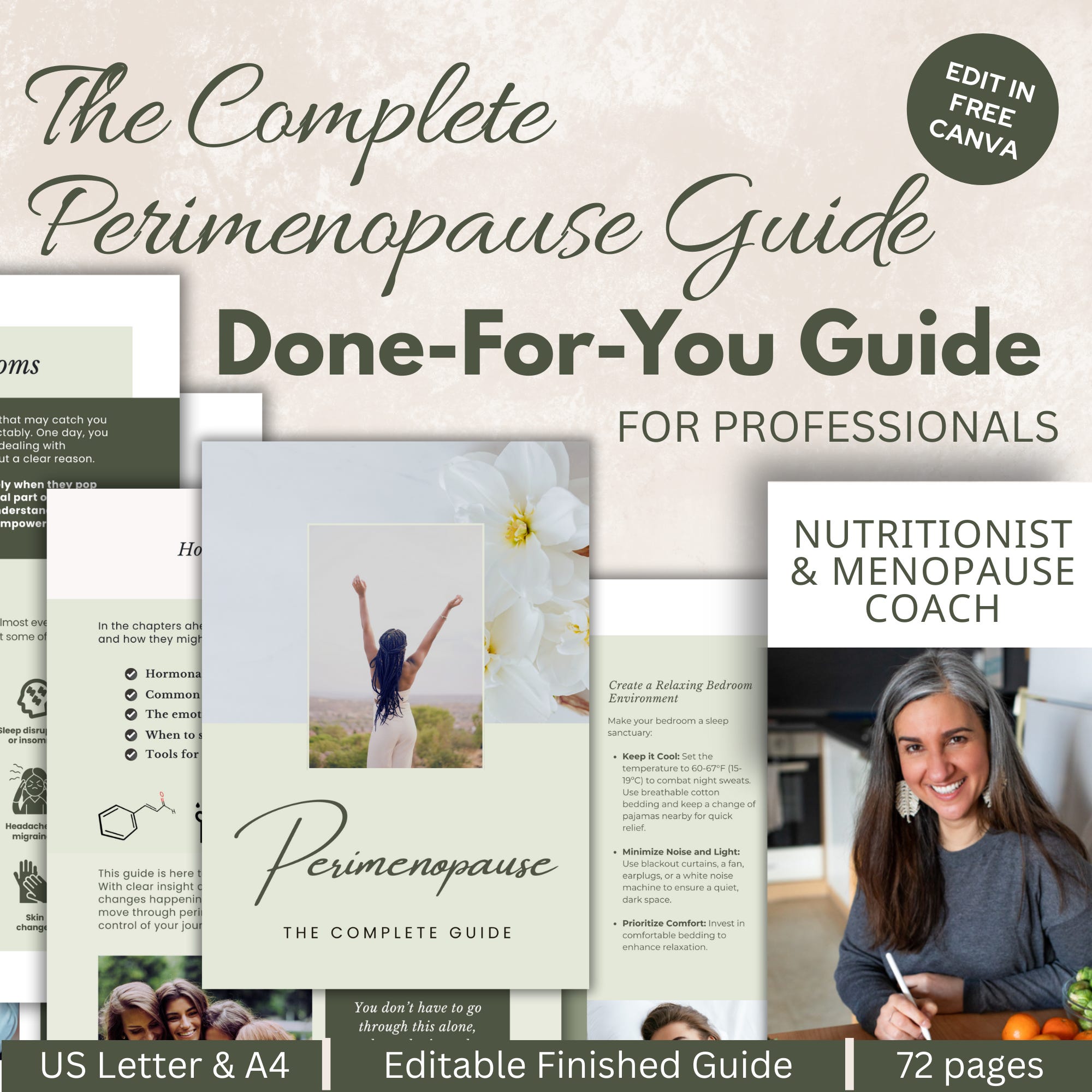
You know that comprehensive perimenopause guide your clients desperately need? The one you keep meaning to create but don’t have 40+ hours to write and design?
I’ve created it for you, and you just need to customize it with your branding.
I’m talking about a done-for-you, 72-page guide created by a Nutritionist & Certified Menopause Coach — ready to brand as your own in Canva (free version works).
Perfect for:
Lead magnets that actually convert
Course bonuses that boost perceived value
Client resources that position you as THE expert
No design skills needed. No starting from scratch. Just add your logo and go.
Whether you’re a health coach, nutritionist, practitioner, or wellness entrepreneur, this is the kind of tool that saves you time while elevating your entire client experience.
🎧 LISTEN:
SONG:
As a Bulgarian resident, I can’t not share the news of the Eurovision winner.
If you are not familiar with the Eurovision Song Contest, it’s an annual international music competition where countries, mainly from Europe, but also a few beyond Europe, each send an original song to compete live on TV.
The winning country will host the following year’s contest, which makes it a major tourism and branding opportunity as well as a chance to showcase culture, music, and creativity.
This is the song.
📚 READ + 🎬 WATCH:
BOOK + TV SHOW: Margo’s has gotten money troubles by Rufi Thorpe
This book tells the chaotic, funny, and surprisingly tender story of a young mom scrambling to survive after an affair leaves her pregnant, broke, and on the edge of eviction. When her ex-wrestler dad moves in, she turns to an unexpected online hustle to keep her little family afloat.
I read it after hearing that Apple TV was going to release a TV show based on the novel.
It made for a lighthearted before-bed read, although at times it became surprisingly engaging.
The TV show is a one-and-done limited series, so all eight episodes wrap up Margo’s story in a single season. It stays pretty close to the novel’s core plot, with a few changes.
The tone is dynamic and engaging, and the cast includes Elle Fanning, Michelle Pfeiffer, Nick Offerman, Nicole Kidman, and Marcia Gay Harden.
SUBSTACK - Pull-Up Power by Carla DiGirolamo
Carla DiGirolamo is a board-certified reproductive endocrinologist specializing in women’s performance and menopausal health, and her Substack articles are always informative and motivating.
This one in particular caught my attention because one of my goals for this summer is to finally do my first real pull-up.
I love this article because it explains not just how to get there, but also why pull-ups matter so much, especially for women in perimenopause.
It shows how they build real, functional strength that supports posture, shoulder health, and long-term independence.
I also really like that it gives clear, practical instructions: from dead hangs and scapular pull-ups to band-assisted reps and EMOM mini-workouts, it all feels totally doable if I stay consistent.
Would you like to make this a summer challenge with me? We could check in every few weeks, share progress, and encourage each other until we both hang, pull up, and celebrate that first successful rep.
If you’re in, leave a comment below or send me an email at hi@claudiacanu.com.
📩 This Month’s Hits
Recipe #7 - Shrimp & Avocado Salad That Supports You Through Perimenopause
AMA #3 - Fatigue, Heart Palpitations, Supplements, Skin & Hair
Recipe #8 - This Chocolate Mousse Has 15 g Protein and 10 g Fiber (and Actually Tastes Good)
Letter #66 - What My Mid-30s Self Got Wrong About Health And the Small Changes That Would Have Made a Big Difference Later
Recipe #9 - Cottage Cheese Breakfast Bowl with Prunes, Chia & Honey
Recipe #10 - This 400-Calorie Salmon Meal Is Surprisingly Nourishing & Filling
🥗 EAT: Einkorn Sardines Meal Bowl
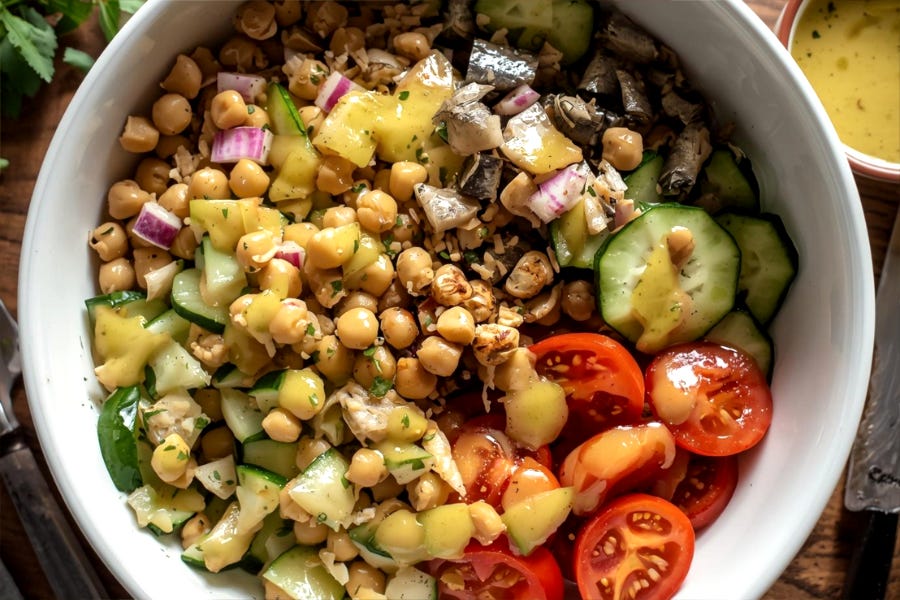
As a nutritionist, I can’t recommend sardines enough: they are packed with nutrients, contain collagen and omega‑3, are easy to keep at home, and make the perfect protein for a quick meal. Plus, they’re also cheap.
I know they can have a strong taste for some people; my husband isn’t a huge fan either, which is why I usually pair them with a bunch of other ingredients that mask the flavor.
I’ve definitely found the right combination in this einkorn sardine meal bowl, because when my husband ate it, he thought he was eating tuna.
I think the secret is the cipolline borettane: if you’re not familiar with them, they are small, flat, mild Italian onions from Emilia‑Romagna, prized for their sweet, delicate flavor and often used in agrodolce or preserved in oil.
I hope you’ll give this recipe a try, and please let me know how you like it.
Ingredients for 5 servings
1 cup of einkorn (uncooked)
400 g of cooked/jarred chickpeas
17.6 oz (500 g) canned whole sardines
2 cucumbers
400 g cherry tomatoes
4.2 oz (120 g) cipolline borettane
vinaigrette
4 Tablespoons of Extra Virgin Olive Oil
4 Tablespoons of red wine vinegar
4 teaspoons of mustard
salt and pepper
Instructions
Rinse the einkorn under cold water. Add it to a pot with 2 cups (480 ml) of water and a pinch of salt.
Bring to a boil, then reduce the heat to low, cover, and simmer until the water is fully absorbed and the einkorn is tender but still slightly chewy, about 25–30 minutes.
Remove from the heat and let it sit covered for 5 minutes, then fluff with a fork and let it cool slightly.
Drain and rinse the chickpeas.
Slice the cucumbers into your favorite shape and cut the cherry tomatoes in half.
Drain the cipolline borettane and slice them in half or smaller if you prefer.
Drain the sardines gently and use a fork to break them into large chunks or a knife to mash them completely.
Combine all the ingredients in a large bowl and prepare the vinaigrette by mixing the olive oil, red wine vinegar, mustard, salt, and pepper.
Add it to the bowl and mix well.
If prepping for a meal plan, wait until the einkorn has reached room temperature before mixing it with the other ingredients.
Nutrition (approx. per portion)
– Calories: ~560–590 kcal
– Protein: ~34–37 g
– Fiber: ~11–13 g
Note: The recipe image is AI-generated
Coming up Next Week…
Next week, I’ll be launching a new type of article: Meal Plans.
Paid subscribers will receive one in their inbox every 2–3 months, and each one will include:
– 10 recipes (5 main dishes, 3 breakfasts, and 2 snacks)
– a suggested meal schedule
– a grocery list for the entire week
Each meal plan will cover all meals for one person for 7 days, including:
7 breakfasts
7 lunches
7 dinners
7 snacks
If you’re cooking for more than one person, simply multiply the quantities in the recipes and grocery list by the number of people.
If you enjoy eating out a few times a week, you can easily adapt the meal plan based on how many meals you plan to eat at home.
I’m creating these meal plans based on how I cook for my husband and myself throughout the week, but if you have different needs or suggestions, feel free to reach out.
💬 Comment & chat!
Anything in this week’s newsletter spark your curiosity? Have questions? Got a recommendation of your own? Pop ‘em below.
❤️ Loved this article and want to support my work without becoming a paid subscriber? → You can buy me a coffee instead ☕